

The Deposit: When It's 10%, When It's 5%, and When It's Gone
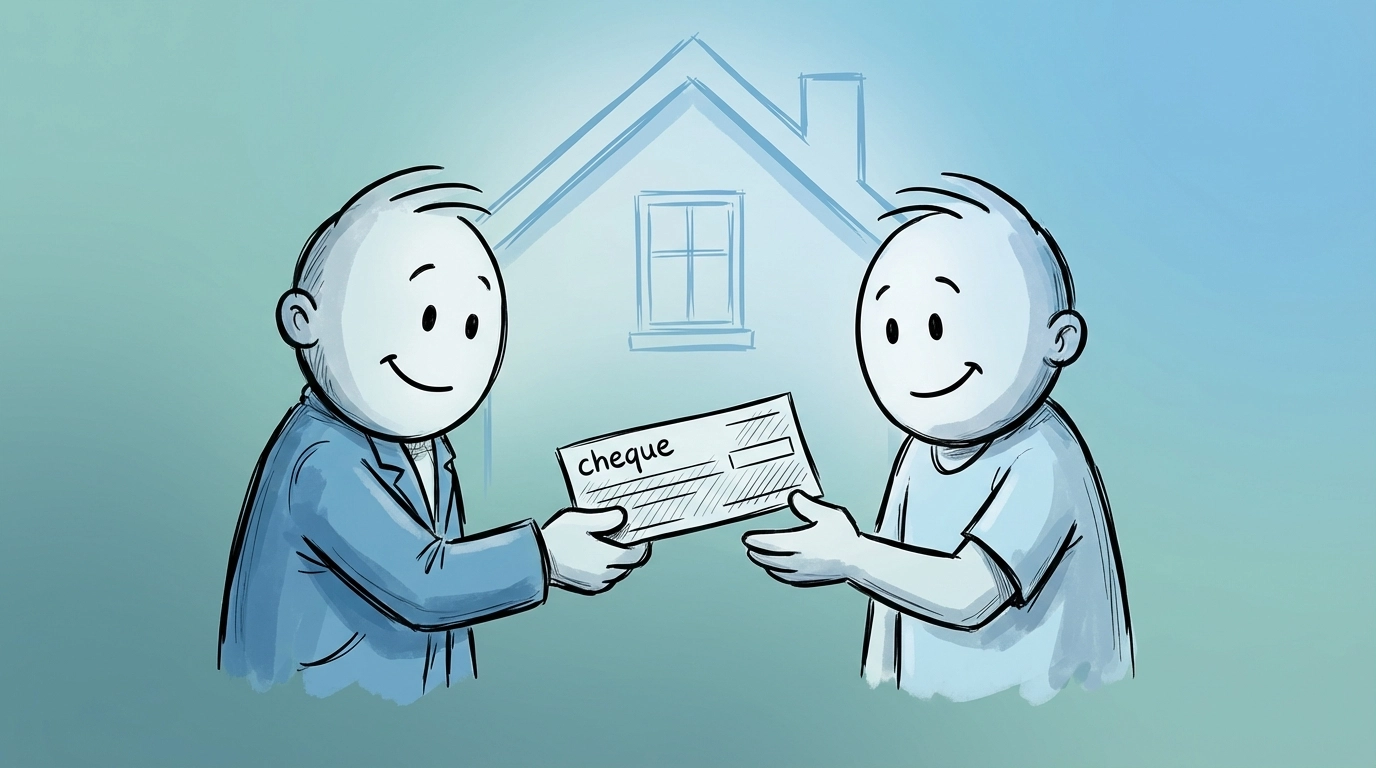
Ah, the deposit. That chunky sum of money you hand over to prove you're serious about buying a property. It's one of the first big financial moments in any property transaction, and one of the most misunderstood.
Is it always 10%? Can you negotiate it down? What happens if everything falls apart?
Let's break it down, NSW-style.
What Actually Is "The Deposit"?
First things first: we're talking about the contract deposit here. That's the money you pay when you exchange contracts on a property in NSW, not the deposit you save up for your home loan (that's a different beast).
The contract deposit shows the seller you're committed. It's skin in the game. Once you've exchanged, that money sits in a trust account until settlement. And if things go sideways? Well, that's where it gets interesting.
When It's 10%: The "Standard" Scenario
In NSW, the standard deposit is 10% of the purchase price.
Buying a place for $1.2 million? That's $120,000 upfront at exchange.
Why 10%? It's been the convention for decades. Sellers like it because it's a meaningful commitment. If the buyer walks away after exchange without a valid reason, the seller can potentially keep the whole lot, and that's a decent buffer against the hassle of a collapsed deal.
For sellers, 10% offers:
- Security that the buyer is serious
- Compensation if the buyer defaults
- Leverage in negotiations
So yes, 10% is the starting point. But it's not set in stone.
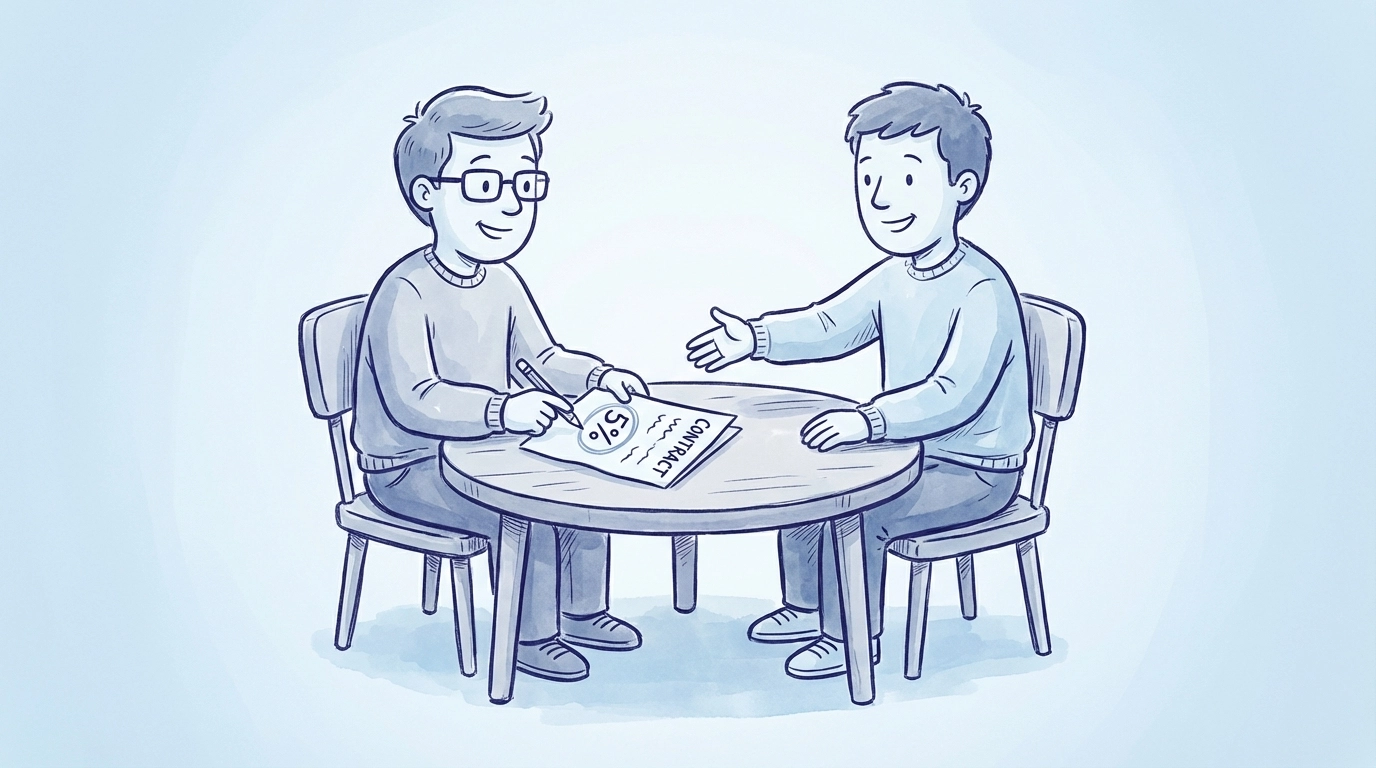
When It's 5%: Negotiation Time
Here's the thing, the deposit amount is negotiable.
Plenty of buyers in NSW pay 5% instead of 10%. Some pay even less. It all depends on what the seller will accept.
Why Would a Seller Accept Less?
Sometimes they just want the deal done. Maybe:
- The property has been on the market a while
- The buyer is offering a quick settlement
- The market is slower, and competition is thin
- The buyer seems rock-solid (strong finance approval, flexible terms)
Why Would a Buyer Ask for Less?
Usually, it's about cash flow. Paying 5% instead of 10% keeps more money available for:
- Stamp duty
- Moving costs
- That renovation you're already planning
- A buffer for the unexpected
If you're buying before you sell, a lower deposit can ease some of the pressure while you wait for your current place to settle.
Pro tip: If you're negotiating a reduced deposit, get your finance sorted early. Sellers are more likely to accept 5% if everything else about your offer screams "reliable."
When Is the Deposit Actually Paid?
In NSW, the deposit is typically paid at exchange of contracts, not when you make an offer, and not at settlement.
Here's the usual sequence:
- You sign the contract
- You pay the deposit (or the first portion of it)
- Contracts are exchanged
- The deposit is held in trust until settlement
Sometimes the deposit is split, say, 0.25% on signing and the rest at exchange. This can happen when there's a cooling-off period involved.
Speaking of which…
Cooling-Off: Your 5-Day Safety Net (Sort Of)

In NSW, most buyers get a 5-business-day cooling-off period after exchange. During this time, you can pull out of the contract, but it'll cost you.
If you rescind during cooling-off, you forfeit 0.25% of the purchase price.
On a $1 million property, that's $2,500. Not nothing, but a lot less painful than losing the full 10%.
Heads up: Cooling-off doesn't apply if you buy at auction or if you've exchanged with a 66W certificate (where you waive your cooling-off rights). So know what you're signing.

Where Does the Deposit Go?
Once you've paid the deposit, it doesn't go straight into the seller's pocket. Nope.
In NSW, the deposit is held by the deposit holder, usually the real estate agent or the seller's legal representative, in a trust account.
It sits there, untouched, until settlement. At that point, it's released to the seller as part of the purchase price.
Why the trust account? It protects both parties. The buyer knows the money is safe. The seller knows it's there. And if something goes wrong, there's a clear process for what happens next.
When Is the Deposit "Gone"? (A.K.A. Forfeiture)
Here's where things get serious.
If you fail to complete the purchase after exchange, without a valid legal reason, the seller can terminate the contract and keep your deposit.
That's right. The whole thing. Gone.
This can happen if:
- Your finance falls through (and there's no subject-to-finance clause protecting you)
- You simply change your mind
- You can't settle on time and the seller rescinds
For a $1.5 million property with a 10% deposit, that's $150,000 you'll never see again.
Ouch.
Can the Seller Chase You for More?
Sometimes, yes. If the seller suffers a loss beyond the deposit (say, they sell to someone else for less), they may be able to sue for the difference. It doesn't happen every time, but it's a real risk.
Can You Get Your Deposit Back?
Sometimes. It depends on why the deal fell apart.
You Might Get It Back If:
- You rescind during the cooling-off period (minus the 0.25% forfeiture)
- A special condition in the contract isn't satisfied (e.g., subject to finance, subject to building inspection)
- The seller can't complete (e.g., they can't provide clear title)
- Both parties agree to terminate by mutual consent
You Probably Won't Get It Back If:
- You just changed your mind after cooling-off
- Your finance was rejected but there was no finance clause
- You failed to settle and had no valid excuse
The lesson? Read your contract carefully. Make sure any conditions you need are actually in there, in writing, before you sign.

Protecting Your Deposit: Quick Tips
Here's how to keep that deposit where it belongs (with you, or at least working toward your new place):
♥ Get finance pre-approval early. Know what you can borrow before you commit.
♥ Include a subject-to-finance clause (Rare as hen's teeth in some areas of Sydney). This gives you an out if the bank says no.
♥ Consider a building and pest inspection clause. Major defects discovered later can become your problem.
♥ Understand the cooling-off rules. Know when you have them: and when you don't.
♥ Don't waive cooling-off lightly. A 66W certificate speeds things up, but removes your safety net.
♥ Get advice before you sign. Seriously. A quick review now can save you six figures later.
The Bottom Line
The deposit isn't just a formality: it's a serious financial commitment. Whether it's 5%, 10%, or somewhere in between, understanding how it works (and when it's at risk) can save you a lot of stress and money.
Quick recap:
| Scenario | Deposit Outcome |
|---|---|
| You settle successfully | Deposit goes toward purchase price |
| You rescind during cooling-off | You lose 0.25% |
| You default after exchange | You may lose the full deposit (and possibly more) |
| Seller can't complete | You should get your deposit back |
| Mutual termination | Depends on what you agree |
Got Questions About Your Deposit?
Whether you're buying your first place on the Northern Beaches or selling up and moving on, we're here to help you understand exactly what you're signing: and what's at stake.
Get in touch with Beaches Conveyancing: beachesconveyancing.com
